From the European Commission Hackathon
to drupal core roadmap.
Role: UX Strategist & SERVICE Designer
Status: SPECIAL MENTION & CORE ROADMAP ADOPTION
From the European Commission Hackathon
to drupal core roadmap.
outcome.
The project was awarded a
The project was awarded a
special mention
special mention
and is currently being integrated into the official Drupal AI Core roadmap.
and is currently being integrated into the official Drupal AI Core roadmap.
We improved the editorial workflow for European Commission content creators by integrating a "Brief-to-Draft" system that automates content production.
The solution enables immediate AI adoption without disrupting established processes (zero Change Management).
We improved the editorial workflow for European Commission content creators by integrating a "Brief-to-Draft" system that automates content production.
The solution enables immediate AI adoption without disrupting established processes (zero Change Management).
strategic logic.
The Path to MVP: Converting Research into a
Scalable Roadmap
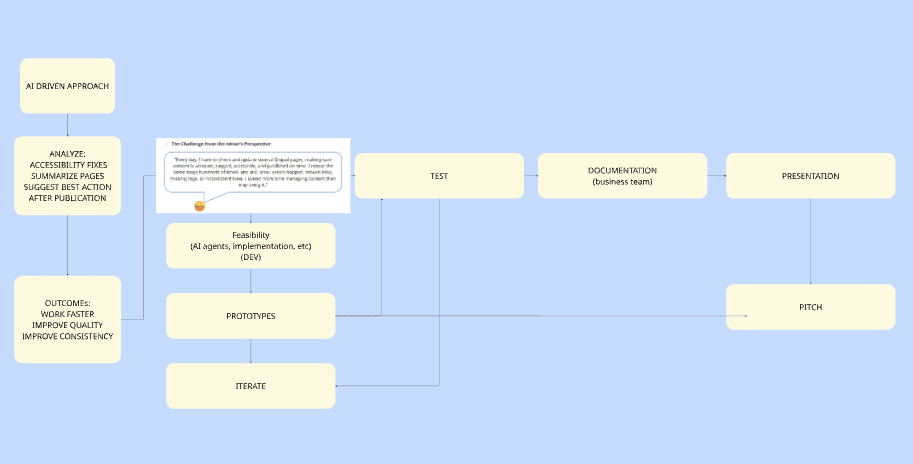
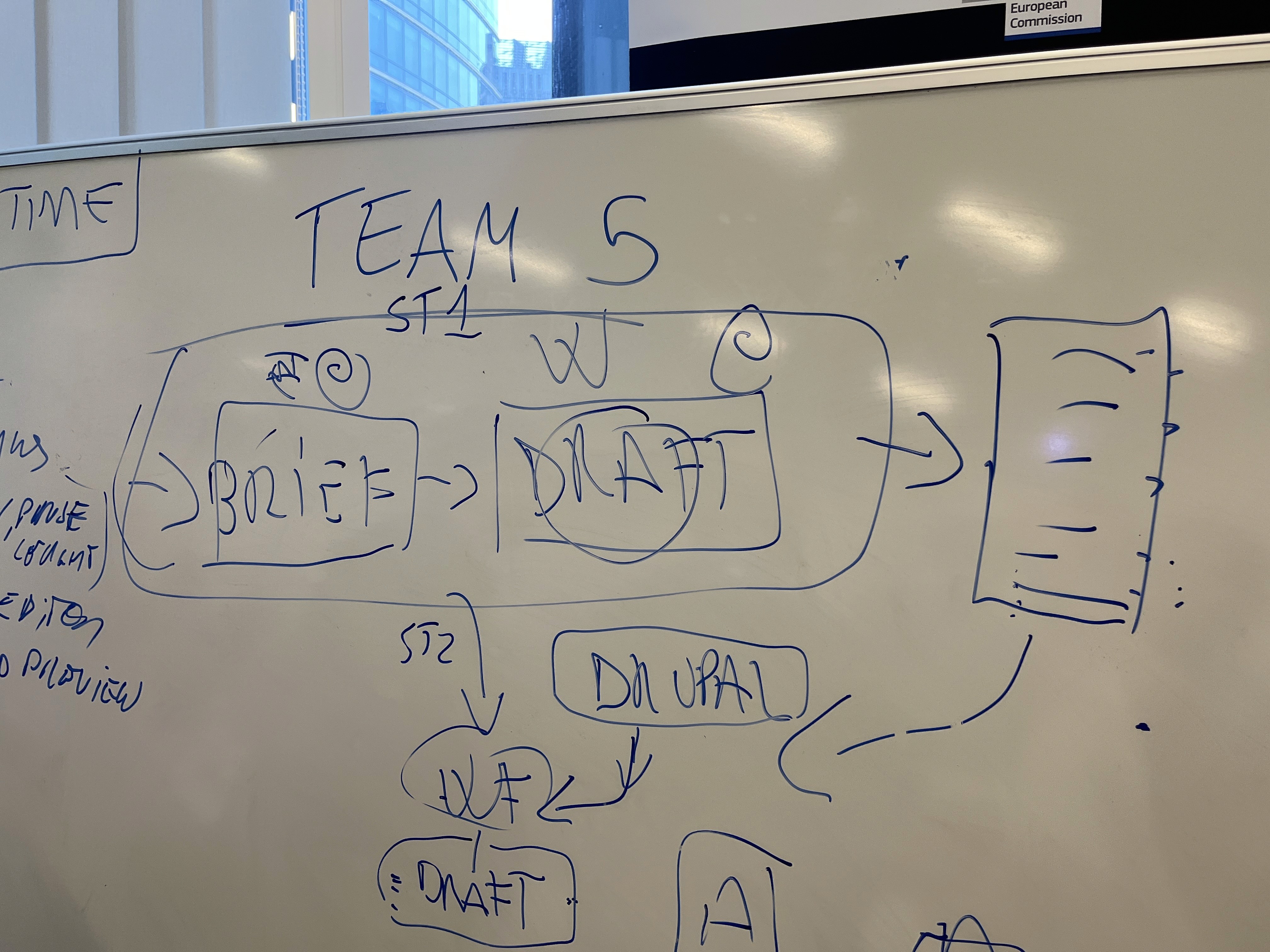
To ground the project from the very start, I sketched an operational roadmap that moved the team away from abstract discussions.
I felt it was vital to establish a clear backbone for the group, transitioning from "words in the air" to a structured AI-driven sequence:
Idea -> Feasibility -> Prototypes -> Test -> Documentation
This roadmap became our strategic compass for the entire 48-hour sprint.
To ground the project from the very start, I sketched an operational roadmap that moved the team away from abstract discussions.
I felt it was vital to establish a clear backbone for the group, transitioning from "words in the air" to a structured AI-driven sequence:
Idea -> Feasibility -> Prototypes -> Test -> Documentation
This roadmap became our strategic compass for the entire 48-hour sprint.
research and discovery.
To define a solution grounded in reality, I conducted a deep-dive interview with the Product Owner to isolate the exact failure points in the current workflow.
discovery &
analysis of
bottlnecks
Key Research Insights:
Content Fragmentation
Assets are created in Word but must be manually dismantled and rebuilt in Drupal, leading to a loss of structure and formatting.
Late-Stage Quality Issues
Problems with accessibility and tone of voice only emerge at the end of the process, triggering repetitive and costly review cycles.
Operational Friction
The transition from creative work to web publication is perceived as a repetitive technical burden, draining time from high-value editorial tasks.
Key Research Insights:
Content Fragmentation
Assets are created in Word but must be manually dismantled and rebuilt in Drupal, leading to a loss of structure and formatting.
Late-Stage Quality Issues
Problems with accessibility and tone of voice only emerge at the end of the process, triggering repetitive and costly review cycles.
Operational Friction
The transition from creative work to web publication is perceived as a repetitive technical burden, draining time from high-value editorial tasks.
risk-based prioritization
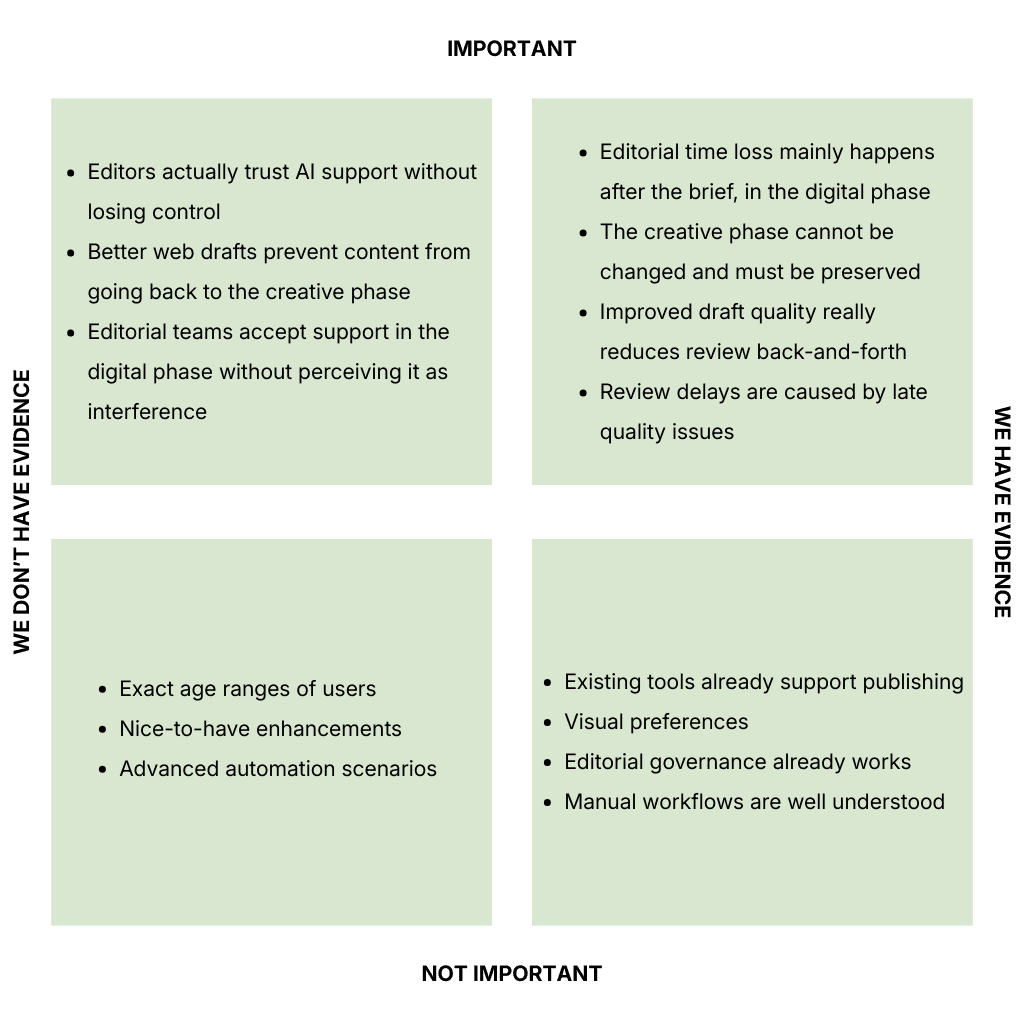
To ensure project viability under extreme time constraints, I conducted an assumption mapping session to separate established facts from critical risks.
By identifying the most dangerous assumptions, we focused our development effort on validating the core value proposition before moving to secondary features.
This lean approach allowed us to manage the backlog with discipline, focusing exclusively on what would move the needle for the Product Owner.
strategy & validation
We intentionally deferred aesthetic enhancements and advanced automations to focus the MVP on Content Readiness, accessibility and workflow stability.
business alignment.
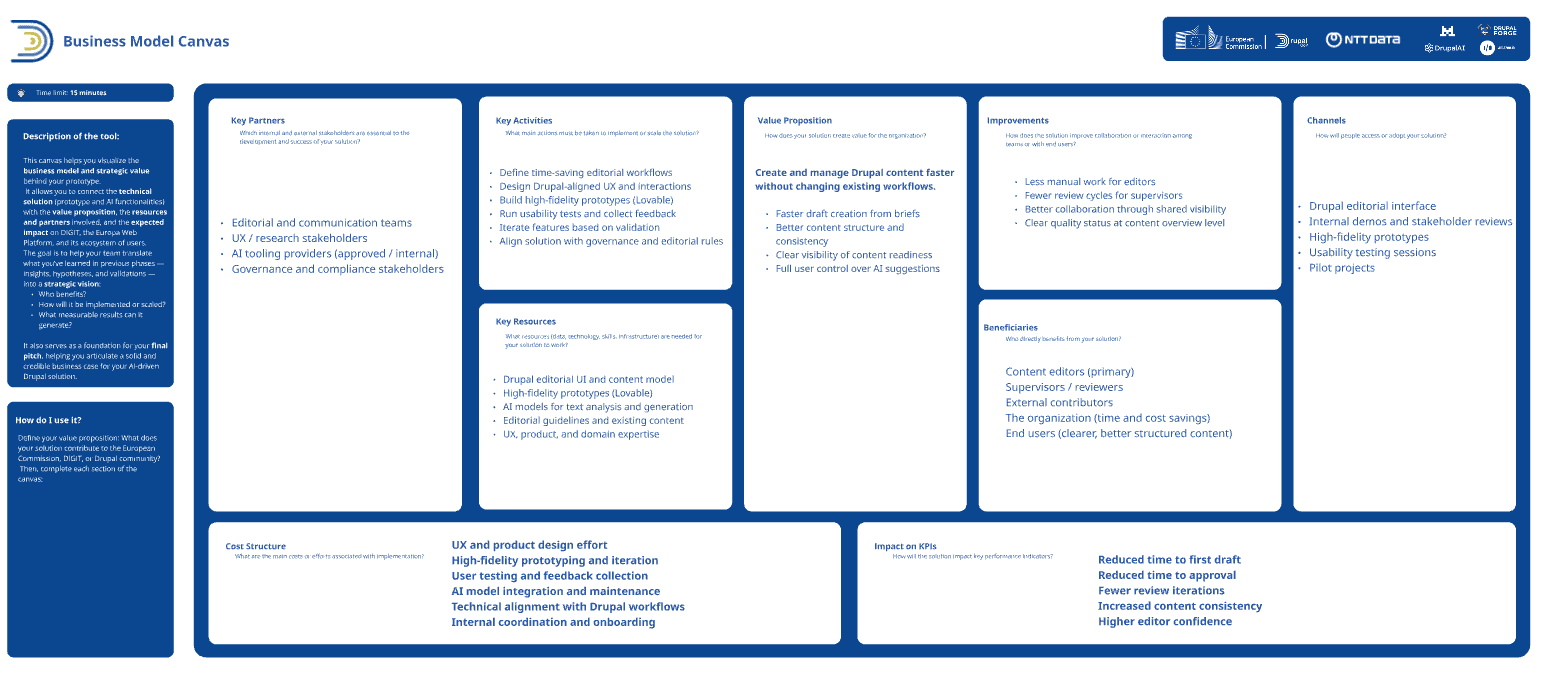
To transform the prototype into a sustainable institutional asset, I mapped the solution’s business logic using the Lean Canvas and Value Proposition frameworks.
This phase was crucial to ensure that our design wasn't just a technical achievement, but a
viable
strategic tool
aligned with the European Commission's long-term objectives.
By focusing on scalability and governance, we moved beyond the "hackathon project" mindset to deliver a solution that justifies infrastructure investment and widespread adoption.
the solution.
automation,
fluidity &
integration
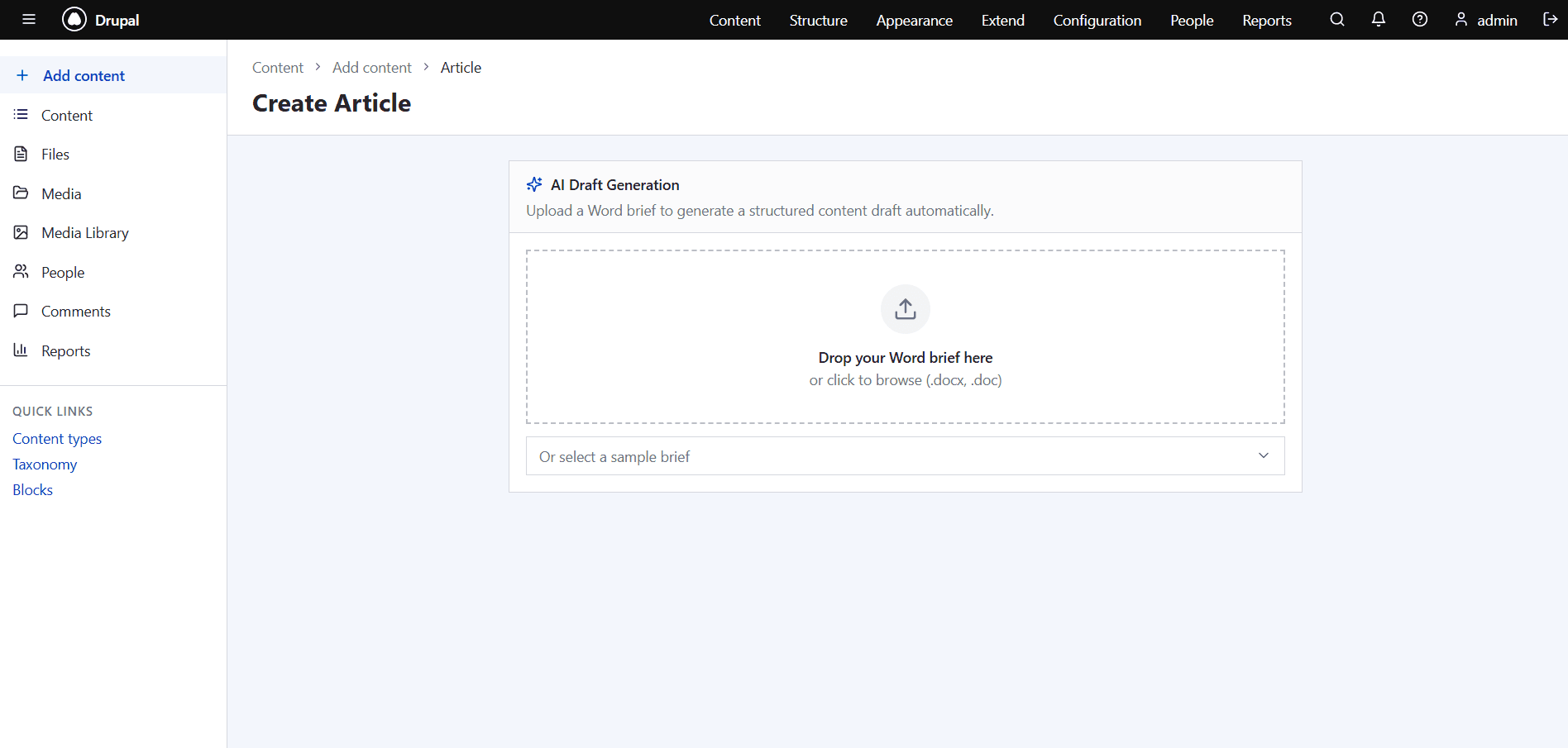
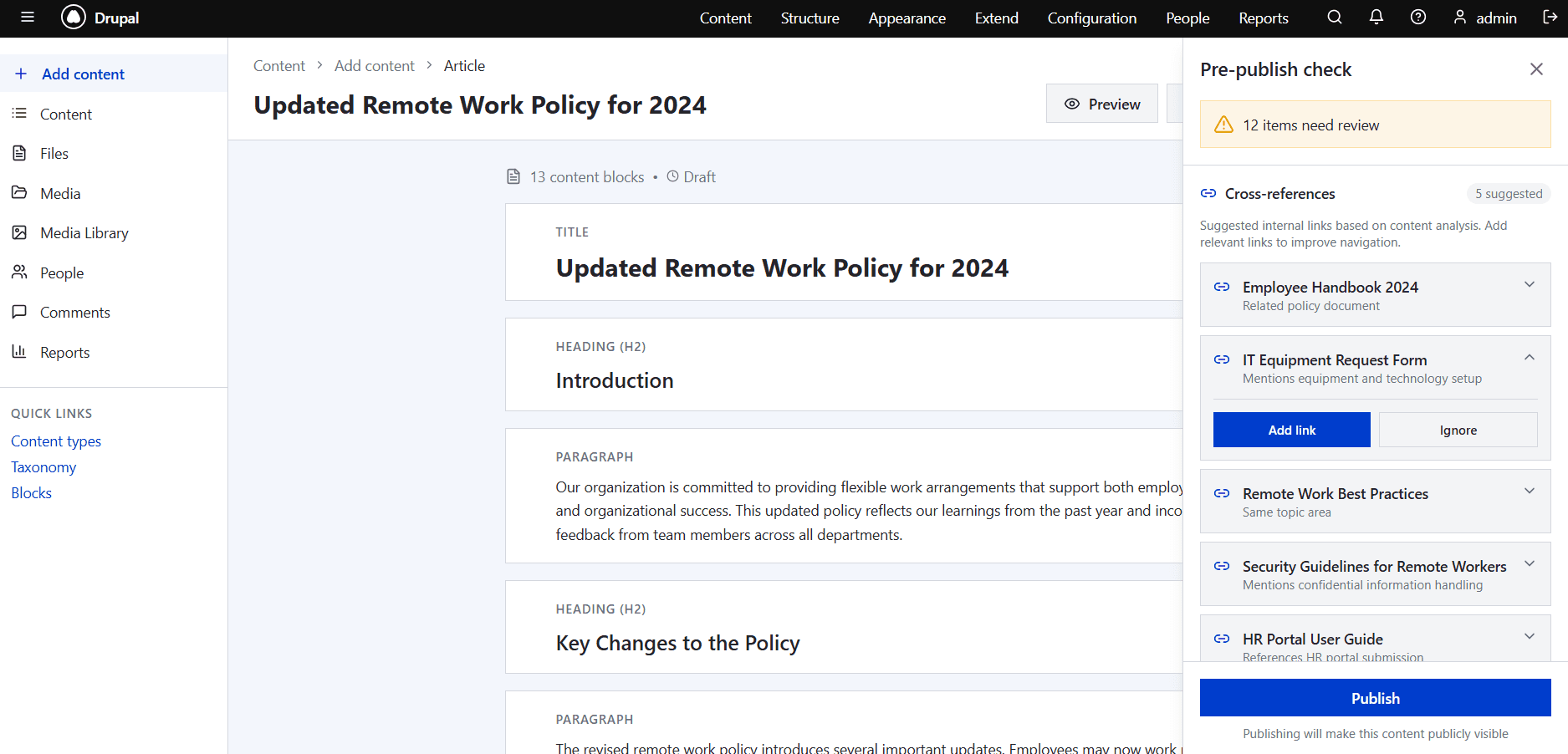
The turning point of the project was realizing that the bottleneck wasn't the CMS itself, but the friction of moving content into it.
Instead of forcing users to adapt to a complex interface, we leveraged their existing habit: the Word document.
By creating a direct "Word-to-Drupal" mapping engine, we eliminated the manual reconstruction phase, allowing the AI to handle the heavy lifting of structural organization while simultaneously automating textual quality and accessibility checks.
Testing was conducted through rapid prototyping to validate the "Word-to-Draft" interaction.
business alignment.
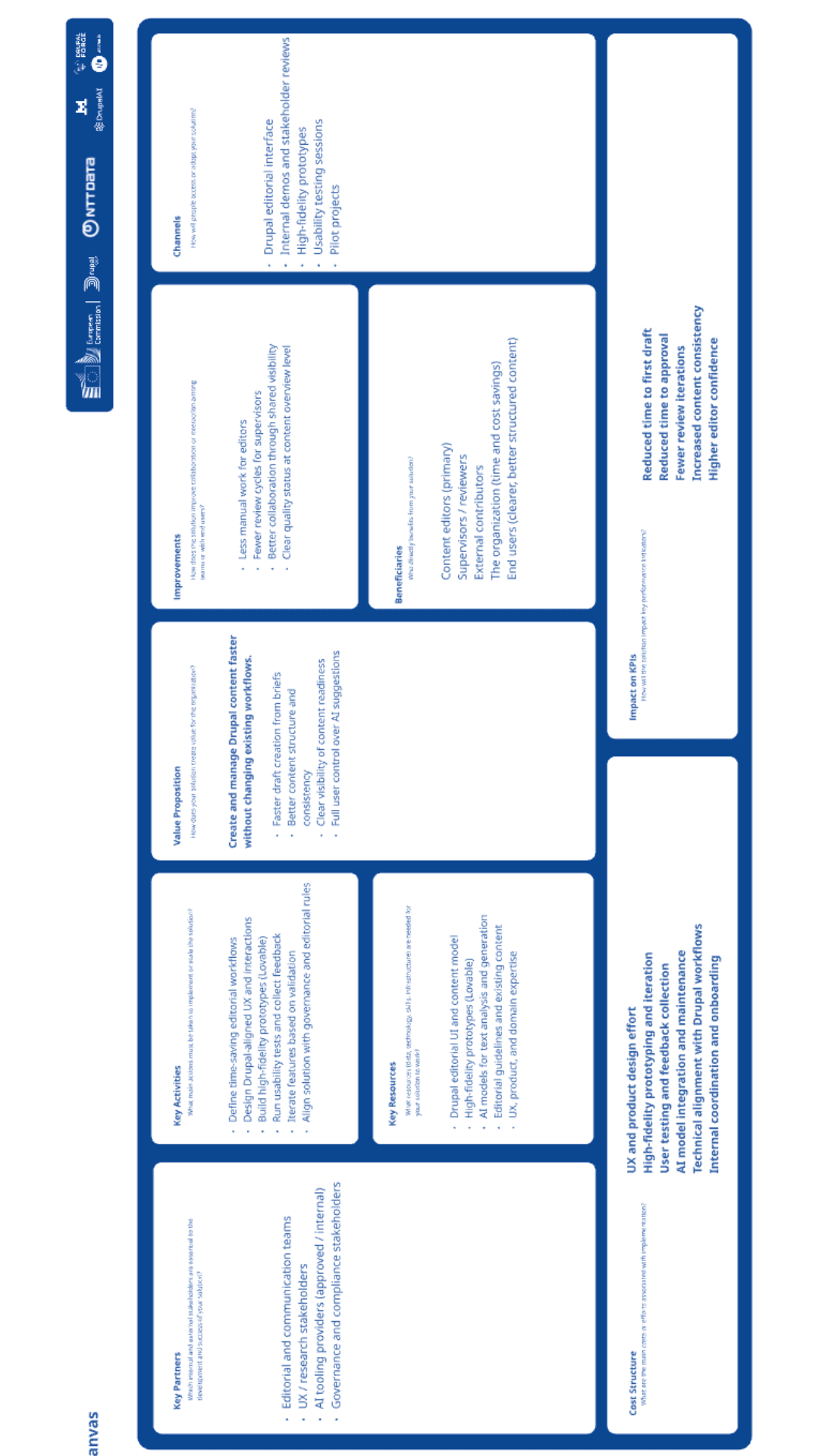
To transform the prototype into a sustainable institutional asset, I mapped the solution’s business logic using the Lean Canvas and Value Proposition frameworks.
This phase was crucial to ensure that our design wasn't just a technical achievement, but a
viable
strategic tool
aligned with the European Commission's long-term objectives.
By focusing on scalability and governance, we moved beyond the "hackathon project" mindset to deliver a solution that justifies infrastructure investment and widespread adoption.
risk-based prioritization
Validated – Critical – Strategic
To ensure project viability under extreme time constraints, I conducted an assumption mapping session to separate established facts from critical risks.
By identifying the most dangerous assumptions, we focused our development effort on validating the core value proposition before moving to secondary features.
This lean approach allowed us to manage the backlog with discipline, focusing exclusively on what would move the needle for the Product Owner.
strategy & validation
We intentionally deferred aesthetic enhancements and advanced automations to focus the MVP on Content Readiness and workflow stability.
interaction
testing &
workflow optimization.
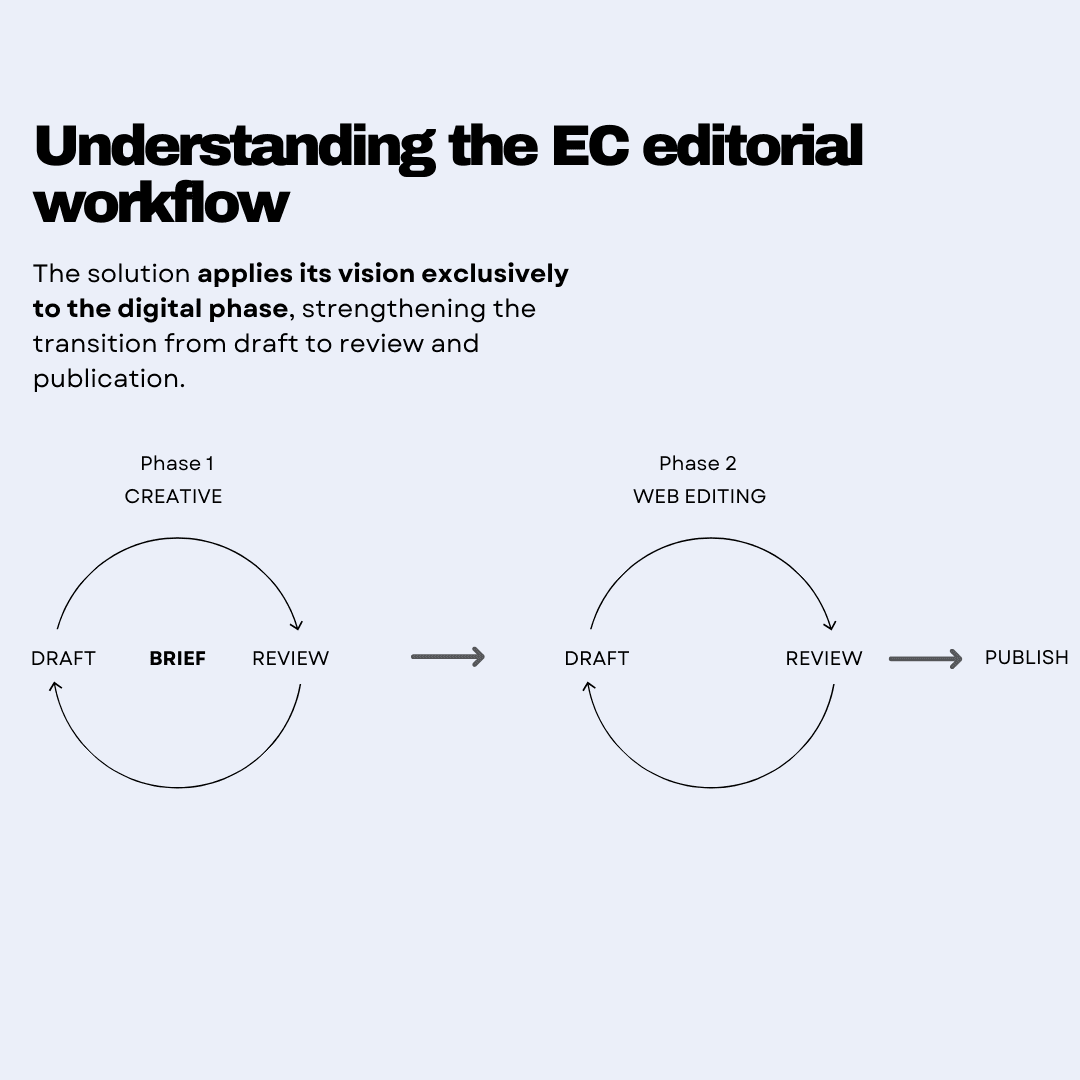
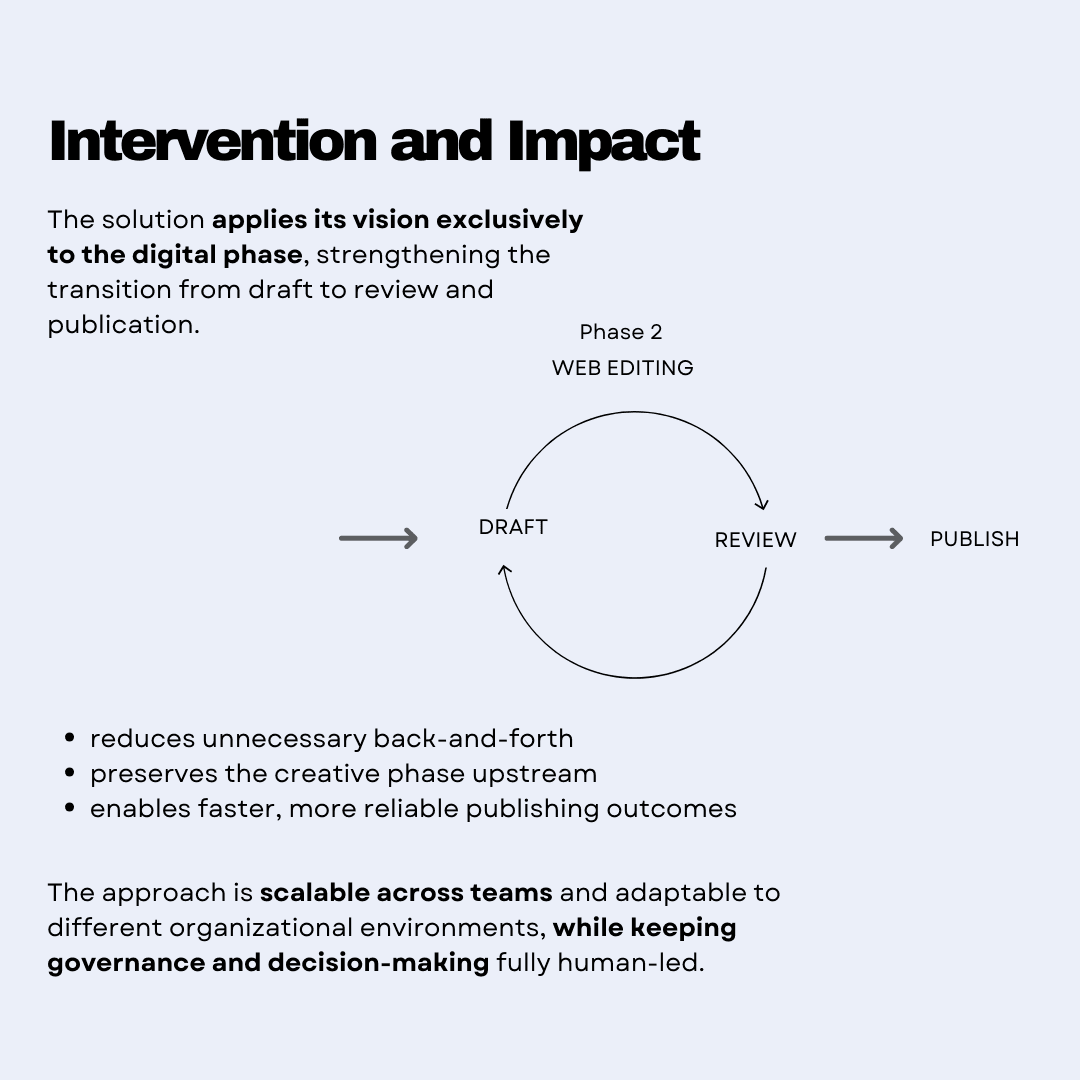
To validate the solution, we analyzed the entire lifecycle from the initial creative brief to the final publication.
The tests confirmed that by collapsing the repetitive loops between the creative phase and web editing, we drastically reduced global production time.
By automating the "Content Readiness" check at the source, we eliminated the constant back-and-forth between departments, transforming a fragmented process into a single, high-velocity flow where the Word document and the Drupal draft exist in perfect synergy.
automation,
fluidity &
integration
the solution.
The turning point of the project was realizing that the bottleneck wasn't the CMS itself, but the friction of moving content into it. Instead of forcing users to adapt to a complex interface, we leveraged their existing habit: the Word document.
By creating a direct "Word-to-Drupal" mapping engine, we eliminated the manual reconstruction phase, allowing the AI to handle the heavy lifting of structural organization while simultaneously automating textual quality and accessibility checks.
Testing was conducted through rapid prototyping to validate the "Word-to-Draft" interaction.
interaction testing &
workflow optimization.
To validate the solution, I analyzed the entire lifecycle from the initial creative brief to the final publication.
The tests confirmed that by collapsing the repetitive loops between the creative phase and web editing, we drastically reduced global production time.
By automating the "Content Readiness" check at the source, we eliminated the constant back-and-forth between departments, transforming a fragmented process into a single, high-velocity flow where the Word document and the Drupal draft exist in perfect synergy.
more projects to explore.
the global result.
Drastic Time Reduction
The "Time-to-First-Draft" was cut significantly by removing manual content reconstruction.
Fewer Review Cycles
Catching accessibility and quality errors during the drafting phase meant fewer rejection loops in the official workflow.
Frictionless Adoption
User testing confirmed that keeping the starting point in Word allowed editors to maintain their creative habits while gaining technical speed.
more projects to explore.
the global result.
Drastic Time Reduction
The "Time-to-First-Draft" was cut significantly by removing manual content reconstruction.
Fewer Review Cycles
Catching accessibility and quality errors during the drafting phase meant fewer rejection loops in the official workflow.
Frictionless Adoption
User testing confirmed that keeping the starting point in Word allowed editors to maintain their creative habits while gaining technical speed.
